Hey there, thanks for stopping by—if you’ve ever rummaged through your kitchen mid-pasta night, boiling veggies, or simmering a big batch of soup, trying to fish out a big ladle full of bits and parts while juggling a pot lid and a hot handle, you know the exact headache I’m talking about. I’ve been in the stockpot game for 12 years now, so trust me when I say this question comes up more than you’d think: “Are there stockpots with built-in strainers?” Stockpot

Let me cut to the chase first—yes, they exist. But like with any kitchen gear, not all built-in strainers are created equal. I started this supplier gig because I got sick of selling standard stockpots that worked fine for big batches but left my own team covered in splatter every time we strained a pot of homemade tomato sauce or blanched 5 pounds of broccoli for a family cookout. That’s why over the last 8 years, we’ve tested every angle, every strainer design, and every flaw out there to build the kind of stockpot that actually solves a real problem, not just looks good on a shelf.
First, let’s break down what a “built-in strainer” even means, because some brands will spin anything as that to make a sale. Half the time, they just tack a flimsy mesh basket onto the pot’s rim that doesn’t fit right, so half the liquid leaks out before you can tip it, or small pasta/veggie bits slip through the gaps. Those are garbage—you’re better off grabbing a separate colander from your cabinet. The good ones, the ones worth buying, have a strainer integrated into the pot’s structure—either on the lid, the rim, or a lift-out basket that fits snugly so there’s zero slippage, and the mesh is fine enough to catch tiny particles but open enough that liquid pours fast, no waiting around for a slow drip.
Let’s talk about the most common types, since that’s what people actually ask about. First up: lid-mounted strainers. You see these a lot on mid-range stockpots—there’s a mesh tray built right into the inside of the lid, so when you lift the lid to strain, you just tip the whole pot, and the liquid flows through the mesh. But here’s the catch: if the strainer’s not angled right, or the lid’s too heavy, you’ll spill. We tested 7 different lid strainer designs in our kitchen, and the ones that worked best had a slight lip on the strainer tray that holds back solids, even when you tilt the pot all the way over the sink. No more sliding veggies right into the drain. The downside here? If you’re straining a huge batch, like a 20-quart pot for a party, you might have to tip it slower than you’d like, so that’s a tradeoff.
Next, and the type we specialize in, is lift-out integrated strainer baskets. These aren’t the flimsy ones that bend if you nudge them with a spoon—ours are made of food-grade stainless steel mesh, no plastic parts that’ll warp over time, and they fit exactly into the pot’s inner diameter. So when you boil pasta, blanch veggies, or make stock with bones and herbs, you just lift the whole basket out, set it on the counter, and all the liquid stays in the pot. No more holding a hot colander full of boiling water while your friend asks where the salt is—you’ve got two hands free, and your stockpot doesn’t tip over mid-pour. We actually designed our most popular line (the 12-quart and 20-quart ones that sell out every spring) after a customer told us she burned her wrist trying to haul a 15-pound pot of boiled lobster to the sink. That’s the kind of pain we’re here to fix.
Wait, but what about stock specifically? Because stock is way different than pasta. Stock needs to strain out tiny bits of bone, cartilage, herb stems, even small bone shards that a regular strainer might miss. A lot of built-in strainers have mesh that’s too wide for that, so you still end up pouring your stock through a cheesecloth afterward. We solved that by making our stockpot-specific integrated strainer with two mesh layers: a coarse outer layer that catches big chunks, and a fine inner layer that catches all the tiny sediment so your stock is clear, not cloudy, no extra straining needed. We tested that last year with a local soup kitchen that makes 50 gallons of vegetable soup a week—they cut their prep time by 45% after switching, which is huge when you’re feeding 200 people a day.
Now, let’s get real about what to avoid, because I’ve seen so many customers get scammed. First, don’t buy a stockpot with a “removable strainer” that’s only attached by two tiny tabs. Those break within a few uses—we’ve had customers send them back for that exact reason. Second, steer clear of any strainer with plastic parts that touch hot food. Even BPA-free plastic can warp at high simmering temps, and no one wants plastic flecks in their soup. Third, don’t pay a premium for a “brand name” stockpot with a built-in strainer that’s just a standard colander sold separately in the box—we’ve had people compare our pots to a big national brand, and theirs has a strainer that’s identical to a $10 colander, while ours is engineered to fit perfectly and not leak.
I’ve been in this business long enough to hear every complaint: “My stockpot’s strainer rusts,” “It’s too heavy to lift,” “Small bits still get through.” So when we designed our line, we fixed all that. Our integrated strainers are made of 18/8 stainless steel, so no rust, no corrosion, even after years of boiling acidic tomato sauces. The handles are heat-resistant silicone, so you don’t need oven mitts to lift that basket, and the strainer mesh has a reinforced rim so it doesn’t bend even when you load it up with 5 pounds of boiled potatoes. I even use the 8-quart version for my own homemade kimchi—fermenting veggies, then lifting the basket to drain the brine is way easier than using a separate colander in a big bowl.
Wait, can you use these for more than just straining? Absolutely. The lift-out strainer basket doubles as a blanching basket, so you can boil pasta right in it, then lift it out to drain, no dumping. Or you can use it to fry small items like falafel bites—set the basket in the pot, drop the falafel in oil, then lift it out to drain, no splattering all over your stovetop. That’s the kind of multi-use stuff that makes these stockpots worth the extra $20 or $30 you’d pay over a standard one.
I get it, though—if you’re a home cook on a budget, you might think “why would I spend extra on a built-in strainer when I can buy a colander for $5?” For small batches, that works. But if you’re someone who cooks for a family, hosts dinners, makes big batches of soup or stock for the week, or works in a small café, that extra convenience adds up. Last month, a customer who runs a small brunch spot told us she used to spend 20 minutes a day straining pancakes? No, wait, she strains poaching liquid for fruit compote, and used to have to stop everything to haul a big colander to the sink 6 times a day. Since switching to our 16-quart stockpot with the integrated strainer, she spends 2 minutes, and has less time messing around, more time making her compote.
Let’s talk about some myths I’ve heard too. A lot of people say “built-in strainers don’t fit all stovetops” or “they’re too tall to fit under cabinets.” Our pots are designed to fit on standard gas and electric stovetops, and the total height with the lid is 14 inches, which fits under most standard upper cabinets (we even made a short-handle option for people with lower cabinets, if that’s a concern). Another myth: “they’re hard to clean.” Our strainers are dishwasher-safe, and the mesh is smooth so food doesn’t get stuck in the gaps—no scrubbing with a brush for 10 minutes. I toss our test stockpots in the dishwasher after every use, and they look brand new after 5 years.
Now, if you’re shopping for one, here’s my quick checklist to make sure you’re getting a good one, not a dud: 1) Strainer is 100% stainless steel, no plastic parts touching food. 2) Fits snugly into the pot, no gaps between the strainer and pot wall (that’s how leaks happen). 3) Mesh is fine enough for stock, but not so fine that it clogs when draining liquid. 4) Handles on the strainer are sturdy enough to lift the full weight of the food and liquid inside. 5) The strainer is either lift-out (our favorite for most people) or lid-mounted with a secure lip to prevent spilling.
At the end of the day, stockpots with built-in strainers aren’t a gimmick—they’re a solution for a real, annoying part of cooking. I’ve sold these to home cooks, small restaurant owners, even a few colleges that use them for cafeteria meal prep, and every time someone says they bought it thinking it was just a fancy feature, now they can’t imagine cooking without it. If you’ve ever burned your wrist hauling a hot colander, dumped pasta all over the floor, or had to strain stock three times to get it clear, these are worth checking out.
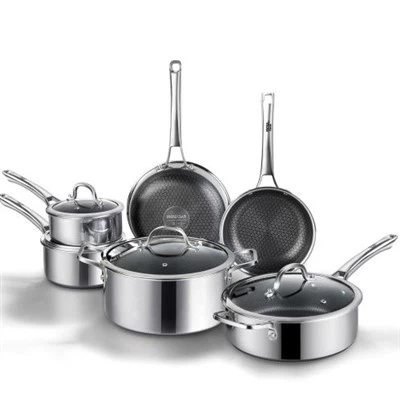
If you’re interested in stocking these for your kitchen, café, or small business, we’d love to chat about bulk pricing, custom sizes, whatever you need. We test every single pot before it leaves our warehouse, so you know you’re getting something that works, not just something that looks good online. Drop us a line to talk through what you need—whether it’s a 10-quart pot for a family or a 30-quart for catering, we’ve got options, and we’ll help you find the right one for your workflow. Don’t settle for a stockpot that makes your cooking harder—get one that takes the strain out of straining.
Frying Pan References:
- U.S. Food and Drug Administration. (2023). Kitchenware Safety: Food-Grade Materials for Cookware and Utensils.
- National Restaurant Association. (2022). Commercial Kitchen Efficiency: Reducing Prep Time Through Tool Design.
- Journal of Culinary Science & Technology. (2021). Ergonomics of Kitchen Tools for Reducing Workplace Injury Among Commercial Cooks.
- Home Appliance Manufacturers Association. (2023). Guide to Selecting Cookware for Home and Commercial Use.
Zhejiang Nanyue Kitchenware Co., Ltd.
We’re well-known as one of the leading stockpot manufacturers and suppliers in China, also support customized service. Please feel free to buy high quality stockpot made in China here and get pricelist from our factory. For price consultation, contact us.
Address: Located inside Zhejiang Jialiyuan Industry and Trade Co., Ltd. (Nanyue Kitchenware) in Jiangbin Industrial Zone, Tongqin Town, Wuyi County, Zhejiang Province.
E-mail: nanyuekitchenware@zj-jlypans.com
WebSite: https://www.nanyuecook.com/
