What’s the pressure required for a good espresso machine? Let’s cut through the jargon, no stuffy textbook stuff here—you’ve probably seen “9 bar” thrown around like it’s some magic number, right? As an espresso machine supplier, I get this question every single day, from home baristas building their first setup to small cafés upgrading their daily workhorses. And honestly? Most people get it wrong. They think higher = better, that 15 bar machines pull “stronger” shots. Nah, let’s break this down like we chat with regulars in the shop. Espresso Machine

First, let’s remember what espresso actually is. It’s water (super hot, almost boiling) pushed through finely ground coffee at a consistent, steady rate, under pressure. That pressure isn’t just for pushing water fast—it’s for creating that golden, creamy crema on top, the stuff that makes a latte art artist swoon or a home barista feel like they’re at a specialty café. Mess up the pressure, and you’ve got either a watery, under-extracted mess (too little pressure) or a burnt, bitter sludge (too much pressure).
So, what’s the sweet spot here? For a long time, the industry’s go-to was 9 bar. That’s the pressure level that came out of old Italian designs, the ones that started the whole espresso craze post-WWII. But wait—recent research and all the barista homies I work with? They’re saying the real “good pressure” isn’t a rigid number. It’s more about how that pressure acts while you pull a shot. Let’s clarify that: pressure is measured in bars, right? 1 bar is roughly the air pressure at sea level, so 9 bar is 9 times that. That initial spike when you turn on the machine? That’s normal—most machines will hit 9 bar quickly, then hold it consistent for 25 to 30 seconds, the standard time for a double shot (about 30ml of liquid espresso).
Here’s where a lot of cheap machines drop the ball. They’ll slap a 9 bar label on the box, but their pressure swings wildly. One second it’s 11 bar, the next it’s dropping to 6 mid-shot. That inconsistency means your shot will taste different every time, even if you weigh your beans the same and grind the same size. As a supplier, I see this all the time: a customer buys a $200 machine advertised as 9 bar, brings it back because their shots are bitter some days and weak others. Turns out the pressure regulator is garbage—can’t hold a steady load. That’s why pressure consistency matters way more than just the number on the spec sheet.
Wait, what about home baristas vs. commercial cafés? Let’s split this. For home setups, if you’re pulling shots for yourself and friends, 8.5 to 10 bar is totally fine. You don’t need a 15 bar beast unless you’re a serious hobbyist entering competitions. Those higher pressure machines can actually be tricky for newbies—if you don’t have the grind size perfect, you’ll blow through the puck (that’s the coffee grounds in the basket) too fast, making a watery mess. For small to mid-sized cafés? 9 bar is still the standard, but we’re seeing more places opt for machines with pre-infusion, which lets you ramp up pressure slowly over 10 to 15 seconds before hitting full 9 bar. That pre-infusion lets the coffee bloom a little, like when you pour hot water over ground coffee to see the CO2 bubble up, which makes the shot smoother and less bitter.
I’ve had a few baristas tell me they swear by 7 bar for light roasts. Dark roasts, they say, need a little higher, around 9.5. That makes sense—light roasts are denser, so they need less pressure to extract without overdoing it, while dark roasts are more porous, so a bit more pressure pulls out those delicious, rich notes instead of making them taste burnt. But again, that’s a preference, not a rule. The core is that your machine’s pressure is consistent, within that 8 to 10 bar range, and doesn’t spike or drop during the shot.
What’s the stuff I warn customers about? A machine that can’t reach at least 8 bar. If your pressure is below 7, you’re going to get under-extracted shots—sour, watery, no crema to speak of. Your coffee will taste like weak drip coffee, not espresso. And if it’s over 11 bar, that’s too much. You’ll end up over-extracting the oils, making the shot bitter, and the crema will be thin and fade fast. Plus, too much pressure can wear out your machine faster, especially the seals and group heads, which is a cost you don’t want when you’re starting out or running a busy café.
As a supplier, I test every machine we carry before it leaves our shop. We don’t just check “does it hit 9 bar?” We run three test shots, measure the pressure every 5 seconds, and make sure it stays within 0.5 bar of our target. That attention to detail is what separates a machine that makes a good shot from one that’s just a box with a pressure gauge. A lot of people ask me why we don’t sell those $500 machines with flashy 15 bar specs—because those specs lie. Most of them only hit that 15 bar for a split second, then drop, and their regulation is garbage. You’re paying for a marketing number, not a good shot.
Let’s tie this to your experience, whether you’re a home user or a café owner. If you’re picking a machine, here’s your quick checklist: 1) It should have a pressure regulator that’s easy to adjust (or already set to hold 8-10 bar consistently). 2) Avoid machines that advertise ultra-high pressure just to sell—focus on stability over max numbers. 3) Pre-infusion is a nice bonus, but not required for a great shot, as long as the pressure is steady.
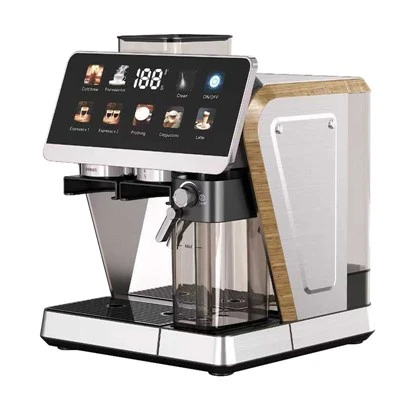
At the end of the day, pressure isn’t just a number on a spec sheet. It’s the difference between a shot that makes your morning and one that makes you reach for a sugary latte instead. If you’re in the market for an espresso machine, or you’re curious to learn more about what works for your setup, reach out to us to chat—we’re here to help, no sales pitch, just real talk about making great espresso.
Boiler Espresso Machine References
- Specialty Coffee Association. (2022). Espresso Preparation Standards: Pressure and Extraction Guidelines.
- International Coffee Organization. (2021). Scientific Analysis of Espresso Brewing Parameters.
- Barista Magazine. (2023). The Truth About Pressure Gauges: Separating Specs From Performance.
- American Society of Brewing Chemists. (2020). Pressure Dynamics in Espresso Extraction.
Foshan City Moccona Electric Co., Ltd.
With abundant experience, we are one of the leading manufacturers and suppliers of espresso machine in China. We warmly welcome you to buy bulk durable espresso machine from our factory. If you have any enquiry about cooperation, please feel free to email us.
Address: Room 202, Building 16, Tongde Intelligent Manufacturing Park (TDIMP), No.9 Guizhou Avenue East, Shangjia Community, Ronggui Street, Shunde District, Foshan City, Guangdong Province
E-mail: tim@mocconaelectric.com
WebSite: https://www.mocconaelec.com/
