Hey there! I’m a supplier of Contact Resistance Testers, and today I wanna talk about the measurement range of a typical Contact Resistance Tester. Contact Resistance Tester
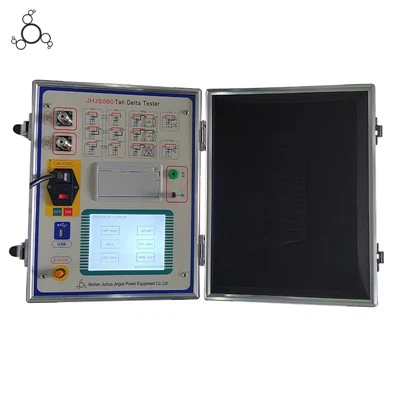
Let’s start with the basics. Contact resistance is the resistance at the interface between two conductors when they are in contact. Measuring this accurately is super important in a bunch of applications, like electrical connectors, circuit breakers, and switches. A Contact Resistance Tester is the go – to tool for getting these measurements.
Now, a typical Contact Resistance Tester usually has a measurement range that can cover quite a wide spectrum. Most of the off – the – shelf testers have a range starting from a few micro – ohms up to several milli – ohms.
Let’s dig deeper into why such a wide range is necessary. In some high – precision applications, like in micro – electronics, the contact resistance can be extremely low, in the range of micro – ohms. For example, in fine – pitched integrated circuit (IC) sockets, the contact resistance between the pins of the IC and the socket needs to be very low to ensure proper signal transmission. Any small increase in contact resistance can lead to signal degradation, data loss, or even component failure. In these cases, a Contact Resistance Tester that can accurately measure in the micro – ohm range is crucial.
On the other hand, in applications like power distribution systems, the contact resistance can be somewhat higher, in the milli – ohm range. In power switches and circuit breakers, for instance, the contact resistance between the contacts when they are closed affects the power losses. Higher contact resistance means more power is dissipated as heat, which can cause overheating and potentially damage the equipment. So, being able to measure up to several milli – ohms is essential for ensuring the safe and efficient operation of these power – related components.
Most Contact Resistance Testers use the four – wire measurement method to achieve accurate results. This method helps to eliminate the influence of lead resistance. With the four – wire setup, two wires are used to pass a known current through the contact under test, and the other two wires are used to measure the voltage drop across the contact. Using Ohm’s law (V = IR), the contact resistance can then be calculated.
The lower end of the measurement range is often limited by factors such as the internal noise of the tester, the stability of the measurement circuit, and the resolution of the analog – to – digital converter (ADC). Noise can create false readings, especially when dealing with very low resistances. To overcome this, manufacturers use various techniques like shielding, filtering, and using high – quality components.
The upper end of the range is usually set based on the application requirements. If a tester is intended mainly for high – power applications, it’ll need to have a higher upper limit. But keep in mind that as the range increases, the accuracy may be affected. So, there’s always a trade – off between the measurement range and the accuracy.
Some of the advanced Contact Resistance Testers on the market today offer even wider measurement ranges. They can measure from as low as 1 micro – ohm up to 1 ohm or more. These testers are often used in research and development labs where a wide variety of components with different contact resistance characteristics need to be tested.
Another important aspect to consider is the test current. The measurement range can also be affected by the test current. Higher test currents are more suitable for measuring higher resistances, while lower test currents are better for low – resistance measurements. Many Contact Resistance Testers allow you to adjust the test current according to the application.
Now, let’s talk about the calibration of these testers. To ensure accurate measurements, a Contact Resistance Tester needs to be calibrated regularly. Calibration involves comparing the tester’s readings with a known standard. The calibration process is usually carried out by a professional calibration laboratory. A properly calibrated tester will give you reliable results within its specified measurement range.
As a supplier of Contact Resistance Testers, I know that different customers have different needs. Some of our customers are in the automotive industry, where they need to test the contact resistance of connectors used in cars. In this case, they might be more interested in the lower end of the measurement range, say from 10 micro – ohms to 1 milli – ohm. Other customers are in the power generation field. They often deal with larger components like circuit breakers and switchgear, and they require a tester that can measure up to several milli – ohms accurately.
We at our company are committed to providing Contact Resistance Testers that meet these diverse needs. Our testers are designed with state – of – the – art technology to ensure high accuracy and reliability across the measurement range. We also offer excellent after – sales support, including calibration services and technical assistance.
If you’re in the market for a Contact Resistance Tester, whether you’re doing research, quality control in a manufacturing plant, or maintaining electrical equipment, it’s important to choose a tester with the right measurement range for your specific application. A tester with a too – narrow range won’t be able to handle all the components you need to test, while one with an overly wide range may sacrifice accuracy.

So, if you’re interested in learning more about our Contact Resistance Testers, their measurement ranges, and how they can fit your requirements, feel free to get in touch with us. We’re always happy to have a chat and discuss your specific needs. We can help you select the best tester for your application and provide all the information you need to make an informed decision.
Transformer Winding Resistance Tester References:
- Electrical Measurement Handbook for Professionals
- Principles of Contact Resistance Testing by Industry Experts
Wuhan Jiuhua Jingce Power Equipment Co., Ltd.
As one of the most experienced contact resistance tester manufacturers in China, we offer a wide range of products with superior quality. Please feel free to wholesale bulk durable contact resistance tester from our factory. For price consultation, contact us.
Address: 601,Unit 1,Building D4-02,Optics Valley Center,303 OpticsValley Avenue,Wuhan
E-mail: market@wuhanjhjc.com
WebSite: https://www.powertransformertester.com/
