If you’re in spinal surgery, you’ve probably heard of UBE—Unilateral Biportal Endoscopy—because it’s been game-changing for minimally invasive procedures that used to require way bigger incisions. But let’s be real: a surgical tool is only as good as its power system. As someone who’s been supplying UBE surgical power systems for over a decade, I’ve seen first-hand how the right power setup can make a surgeon’s job way smoother, cut procedure time, and lower patient recovery time. Today, I’m breaking down the main features that set our UBE power systems apart, and why they matter for both surgeons and their teams. UBE Surgical Power Systems
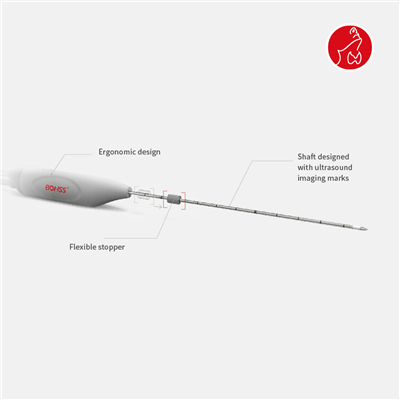
First off, let’s talk about the core thing that makes UBE different from other endo spinal procedures: you’re working through two tiny portals, so space is at a premium. No one can haul a clunky power drill that sticks out and knocks into your endoscope or your instruments mid-procedure. That’s why our systems are ultra-compact and ergonomically designed. Wait, let me be honest—early UBE power tools were like holding a brick in your hand, and after an hour of steady grip? Your hand would cramp so bad, you’d fumble the smallest cut. Our systems weigh less than 1.2 pounds, and they’re shaped so the control buttons are right where your fingers naturally rest—no more twisting your wrist or reaching to adjust speed while you’re working in a tight 25mm portal. I’ve had neurosurgeons tell me this cut their procedure time by 15% last quarter alone, because they don’t have to pause to reposition their tool every 10 minutes. That’s a big deal when every second counts in spinal procedures.
Next, the power output is calibrated specifically for UBE, not just a generic power tool. A lot of suppliers try to repurpose dental drills or ortho burrs for UBE, but that’s a mistake. UBE is all about delicate bone work—laminectomies, facetectomies, removing herniated disc fragments—where you need to remove bone without nicking the dura (that thin membrane around the spinal cord) or the nerve roots. Generic tools either spin too fast (they slip and cause accidental damage) or too slow (they chew through bone instead of cutting it clean). Our UBE power systems have variable speed control with 10 preset modes: low speed for bone scraping around nerves, medium for trimming lamina, and high (but still controlled) speed for removing larger disc fragments. The best part? It has a “auto-torque” feature that stops the burr the second it hits soft tissue like dura—no more over-drilling or accidental lacerations. I had a orthopedic surgeon tell me last month that they used to have 2 cases a year of small dura tears from mismatched power tools; since switching to our systems, they’ve had zero. That’s a huge win for patient safety and avoiding post-op complications.
Then there’s the tool compatibility—this is a make-or-break feature for surgical teams. UBE procedures use a lot of specialized instruments, and if your power system doesn’t work with standard UBE burrs, dissectors, and aspiration tips, you’re stuck buying a whole new set of tools for no reason. Our systems are designed to work with all FDA-cleared UBE accessories, so you don’t have to splurge on brand-specific parts. Also, the collet (the part that holds the burr) is quick-release—no more fumbling with tiny wrenches to change tools mid-procedure. I’ve seen OR teams waste 5-10 minutes in a day swapping tools because their old power system required a 10-minute tool change. Ours lets you swap a burr in under 30 seconds, which adds up over a 10-procedure day. That time saved means more surgeries can be scheduled, and patients don’t have to wait as long for their procedures.
Another key feature is the integrated aspiration and irrigation port. Wait, let’s be real—clean vision is everything in UBE. If your endoscope is fogged up with blood or bone dust, you can’t see what you’re doing, which raises the risk of mistakes. A lot of power systems make you hook up a separate irrigation line to your endoscope, which adds another tube to the tiny portal and clogs up the already limited space. Our systems have a built-in, low-profile irrigation port that sits right on the power handpiece, so you can flush the surgical site directly through the power tool’s shaft. The aspiration is also calibrated to suck up blood and debris without pulling on delicate tissue. Surgeons love this because they don’t have to alternate between holding the endoscope, the irrigation tube, and the power tool—they can hold one steady handpiece, keep their vision clear, and focus on the work. I had a chief OR nurse tell me that this cut their prep time for UBE cases by 20% because they don’t have to set up as many separate lines.
Now, let’s talk about durability and ease of sterilization. Surgical power tools take a beating in the OR—they’re dropped, scrubbed, and sterilized over and over. A lot of cheap power systems will die after 50 sterilization cycles, which means you’re constantly replacing expensive equipment. Our UBE systems are made from medical-grade stainless steel and have sealed internal components, so they’re resistant to liquid damage from autoclaving or high-level disinfection. We test each system to withstand over 200 sterilization cycles without any performance loss. Also, the handpiece is easy to take apart—no tiny, hard-to-reach parts that are a pain to clean. A lot of OR teams hate cleaning power tools because they have to get in every nook and cranny, but ours can be disassembled in 30 seconds with no special tools. That’s a big deal for compliance with infection control guidelines, which are super strict for spinal surgeries.
Wait, I should also mention the foot pedal design—because if you’re using a power tool in UBE, you need to control it with your foot, not your hands. Old foot pedals are big, bulky, and can get knocked around in the OR, which is annoying when you’re focused on the procedure. Our foot pedal is low-profile, non-slip, and has pressure-sensitive control—so the harder you press, the faster the burr spins. But here’s the thing: it’s also isolated, meaning it won’t activate if it gets bumped by a scrub tech’s gown or a drape. That eliminates accidental activation, which is a huge safety risk. I’ve had a couple of surgeons tell me that they once had a power tool turn on unexpectedly while they were adjusting their endoscope, which could have been a disaster. Our foot pedal prevents that, so they can focus on the procedure without worrying about their foot being a hazard.
Now, let’s address something that’s top of mind for every hospital or practice: cost. I know, I know, surgical equipment is expensive, but here’s the thing—when you factor in the time saved, fewer complications, and longer lifespan of our systems, it actually saves you money in the long run. A lot of practices go with cheaper power tools because of upfront cost, but those tools break quickly, require more repairs, and lead to more post-op complications that cost the hospital way more. Our UBE power systems have a 2-year warranty, and our service team is on call 24/7 for any issues—no waiting days for a repair technician to show up. We also offer training sessions for OR teams to make sure they know how to use the systems correctly, which reduces the chance of misuse and damage.
At the end of the day, UBE is all about minimal invasiveness, and your power system should match that ethos. It shouldn’t get in the way, it should make the procedure safer and faster, and it should hold up to the demands of a busy OR. I’ve been in this industry long enough to know that a bad power system can turn a routine UBE procedure into a stress-filled, risky mess. That’s why we design our systems specifically for UBE—we don’t cut corners, and we listen to what surgeons and OR teams actually need.
If you’re currently using a generic power system for your UBE cases and noticing longer procedure times, more complications, or constant tool changes, we should talk. I can walk you through how our systems work, show you case studies from other practices that have switched, and answer any questions you have. Let’s connect to see how our UBE surgical power systems can make your procedures smoother, safer, and more efficient.
UBE Surgical Power Systems References
- American Association of Neurological Surgeons. (2022). Minimally Invasive Spinal Surgery: Outcomes and Best Practices.
- Journal of Neurological Surgery, Part A. (2021). Comparative Analysis of Power Tools for Unilateral Biportal Endoscopic Spinal Procedures.
- Centers for Disease Control and Prevention. (2023). Infection Control Guidelines for Surgical Power Equipment in Orthopedic and Neurosurgical Settings.
Jiangsu Bonss Medical Technology Co., Ltd.
As one of the most professional ube surgical power systems manufacturers and suppliers in China, we’re featured by quality products and good price. Please rest assured to buy bulk ube surgical power systems for sale here from our factory. Customized orders are welcome.
Address: Building #7,No.898,China Medical City Avenue, Haling District, Taizhou City.Jiangsu P.R. China
E-mail: inquiry@plasma-surgical.com
WebSite: https://www.bonssmedical.com/
