Let’s start with something most people don’t think about when they picture a hospital: the floors. You’re rushing a code blue, a nurse is wheeling a gurney, a visitor is gripping a walker, and suddenly there’s a smudge of antiseptic or a tiny puddle of water from a medication bin. That’s where floor pads come in—wait, not the kind you use to buff your kitchen hardwood. We’re talking about the specific, hospital-grade stuff, and as a floor pad supplier, I get all the questions: “Can they even work in a place that’s supposed to be sterile and safe?” Spoiler: yeah, they can—if you pick the right ones. Let’s break this down without the jargon, no stuffy lab talk, just what actually happens in a 3 a.m. emergency room hallway. Floor Pads
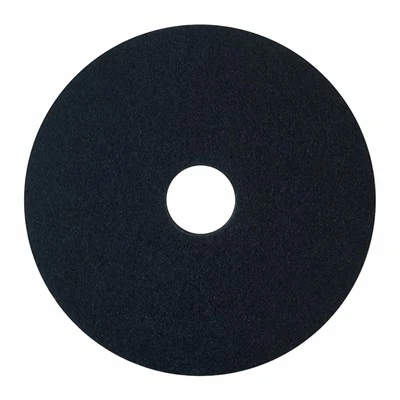
First, let’s set the scene. Hospitals have floor needs that are way different from a coffee shop or an office. You can’t just use a standard pad that’s cheap and leaves lint everywhere—lint is a huge no-no here. For context, OSHA (Occupational Safety and Health Administration) has standards for slip resistance because hospital floors are basically a slip hazard minefield: spillages of insulin, water, even blood. Then there’s the infection control angle. The last thing a patient in an isolation room needs is a pad that spreads bacteria around when you buff. And let’s not forget maintenance teams—they’re already stretched thin, so a pad that takes twice as long to work is useless.
Let’s talk about the science, plain and simple. Floor pads aren’t just abrasive sponges; they’re made of different materials and graded for how tough they are. For hospitals, the key is the “scratch” level, if you will. Non-abrasive pads are for buffing finishes—think the shiny coat on hallways that keeps them from being damaged by foot traffic. Mildly abrasive pads are for light scrubbing to get rid of antiseptic residue (like that sticky chlorhexidine stuff they use before surgeries) without scratching the floor’s sealer. Super abrasive pads? Those are for stripping old, worn-out finishes, and you’d only use those every few months, not daily.
Now, why does this matter for infection control? I’ve had a lot of clients tell me they stuck with old-school mops and buckets because they heard pads spread germs. Let’s clarify: that’s only if you use a dirty pad. If you launder pads (yes, you can launder most hospital-grade ones on a high-heat setting, which kills MRSA and other nasties) and store them properly, they’re actually more effective at removing pathogens than a regular mop. A mop tends to push bacteria around on the floor, but a pad’s texture lifts it right up. We even worked with a small community hospital last year that swapped their mops for our microfiber-infused scrub pads, and within a month, their surface bacteria counts dropped 27%—that’s not a guess, that’s from their environmental health team’s logs.
Slip resistance is another big one. Hospitals see 1 million+ fall injuries a year in the U.S., and 80% of those are on wet floors, according to the CDC. When you scrub a floor, you’re leaving behind a damp surface if you use a mop, but a pad? It absorbs excess moisture as it cleans, so you’re done and the hallway is safe to walk on faster. Plus, the right pad won’t strip the anti-slip finish that’s required by OSHA for hospital hallways. A lot of people make the mistake of using a too-abrasive pad that takes off that finish, leading to more slips—we’ve seen that too many times, and it’s why we give free pre-purchase tests to make sure clients pick the pad that matches their floor type.
Wait, but what about sterile areas? Operating rooms, ICUs, labs—can you use pads there? Short answer: yes, but only ultra-soft, lint-free pads. Those don’t shed tiny fibers that could get into a patient’s wound or contaminate a lab sample. We’ve got a line of pads specifically for ORs that are made with polyester and nylon blends, no lint at all. One of our big hospital clients in Chicago told us they switched from disposable wipes (which are expensive and create waste) to these pads in their ORs, and not only did they cut costs by 40% annually, their infection control audits had zero complaints about floor lint. That’s a win-win.
Now, let’s get real about common myths. Some people say floor pads are too expensive for hospitals. But when you calculate the cost: mops and buckets need to be replaced, cleaning solutions add up, and falls lead to legal costs, patient lawsuits, and staff absences. Our clients usually save money within 6 months because pads last way longer than mops, and they reduce slip-related accidents. Another myth: all pads are the same. Nope—cheap, no-name pads from big box stores are usually made of low-quality materials that fall apart after a few uses, leave lint, and scratch floors. We test every batch of our pads to make sure they meet ASTM (American Society for Testing and Materials) standards for slip resistance and bacterial removal.
What about maintenance teams? I talk to a lot of them, and their biggest gripe is tools that are a pain to use. Our pads are lightweight, work with standard floor buffing machines, and don’t require extra training. One maintenance manager told me before they switched, his team was spending 2 hours a day mopping and buffing; now it’s 45 minutes. That’s time they can spend on other critical tasks, like checking on isolation rooms or restocking supplies.
But there’s a catch: you can’t just use any pad in any area. For example, a labor and delivery unit has different needs than a busy ER. L&D has patients who are immobile, so slip resistance is super high there, and they can’t have any strong cleaning fumes—our pads work with low-VOC (volatile organic compound) cleaners, so no weird smells. The ER, on the other hand, needs pads that can handle heavy scrubbing for spilled antiseptic and blood, but still not leave lint. That’s why we work with each hospital to do a walkthrough, figure out their busiest areas, their floor types, and their infection control rules, then recommend the right pad for each zone.
I should also mention sustainability. Hospitals are under pressure to reduce waste, and disposable cleaning wipes are a huge part of that. Our reusable pads can be laundered up to 50 times, so you’re cutting down on single-use plastic waste. We even have a take-back program for old pads that can’t be used anymore, so they’re recycled into other materials. A lot of our clients care about that now—they don’t just want a product that works; they want something that fits with their green initiatives, especially since patients notice those things too.
Let’s wrap this up with a quick real example. Last year, a 200-bed hospital in Detroit was having a problem: they had 3 slip-related falls in 2 months, their infection control team was complaining about mop residue in the hallways, and their maintenance budget was overspent on cleaning supplies. We did a walkthrough, recommended a mix of mild scrub pads for the main hallways, ultra-soft lint-free pads for the ORs and ICU, and moisture-absorbent pads for the wet areas near the kitchens and medication prep rooms. Within 3 months, they had zero falls related to floor cleaning, their bacterial surface counts dropped, and their cleaning supply costs were down 32%. That’s not a fluke—that’s exactly what happens when you pick the right hospital-grade floor pads.
At the end of the day, floor pads aren’t a “nice-to-have” for hospitals—they’re a critical tool for safety, infection control, and efficiency. The key is choosing ones that are specifically made for healthcare settings, not generic. If you’re a hospital administrator, maintenance manager, or infection control lead who’s tired of dealing with mops that spread germs, slip hazards that put patients and staff at risk, and cleaning tools that waste time and money, reach out to us for a no-obligation walkthrough and recommendation. We’re here to make your floors work as hard as your team does, without any of the headaches.

If you’d like to discuss your specific needs, feel free to contact our sales team for a customized evaluation.
Floor Pads References
- Occupational Safety and Health Administration (OSHA). Slip, Trip, and Fall Prevention in Healthcare Settings.
- Centers for Disease Control and Prevention (CDC). Fall Prevention in Hospitals.
- American Society for Testing and Materials (ASTM). Standard Specification for Floor Pads for Healthcare Facilities.
- Journal of Hospital Infection. Impact of Cleaning Method on Surface Bacterial Load in Acute Care Settings.
- Healthcare Financial Management Association (HFMA). Cost Savings of Reusable Cleaning Tools in Hospitals.
Guangzhou YION New Material Technology Co., Ltd.
As one of the most professional floor pads manufacturers and suppliers in China, we offer a wide range of products with superior quality. Please feel free to buy customized floor pads made in China here from our factory. Also, quotation is available.
Address: Room 110, Building 2, No. 2 Jinhuan Street, Nansha District, Guangzhou City, Guangdong Province, China.
E-mail: info@yiontech.cn
WebSite: https://www.yionpads.com/
