If you’ve ever spent time under a vehicle replacing worn suspension parts, you know that the upper ball joint is one of those components that quietly holds the whole system together—until it doesn’t. As someone who’s spent the last 12 years working as an upper ball joint supplier, I’ve seen first-hand how a lot of shops and even some DIYers skip the critical step of verifying part quality, only to deal with premature failure, uneven tire wear, or worse, a suspension failure mid-drive. Over the years, I’ve built a step-by-step process for our team to test every upper ball joint that leaves our warehouse, and I’ve shared a simplified version of that process with our clients to help them avoid costly mistakes. Here’s how to verify the quality of an upper ball joint, straight from a supplier who’s been in the trenches long enough to know what works. Upper Ball Joint
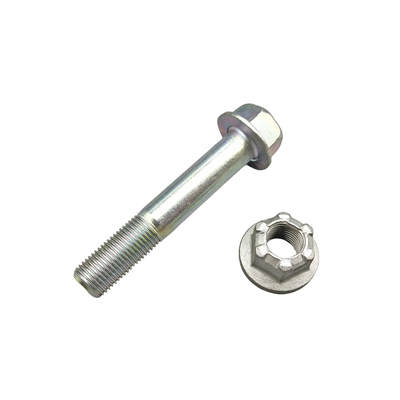
First, let’s get the basics right: what even is an upper ball joint, and why does quality matter? It’s a pivot point that connects the control arm to the steering knuckle in a vehicle’s front suspension (on rear-wheel drive and some all-wheel drive models) and allows the wheel to move up and down while steering. A bad upper ball joint can cause loose steering, clunking noises over bumps, and in extreme cases, the wheel can separate from the vehicle entirely. That’s not a problem to brush off. So when you’re verifying quality, you’re not just checking a part—you’re checking safety.
The first step, and arguably the easiest to overlook, is material testing. Every upper ball joint is made of three main parts: the housing, the stud, and the bearing assembly inside. If any of these are made of cheap, low-grade material, the part will fail before its time. Let’s break this down. The stud is the part that bolts to the steering knuckle, takes the brunt of the load from driving, steering, and hitting potholes. If it’s made of mild steel instead of forged alloy steel, it’ll bend or snap under stress. Forging is non-negotiable here—forged steel has a uniform grain structure that makes it way stronger than cast or machined steel. At our facility, we test every stud with a hardness tester; we aim for a Rockwell hardness of C45 to C55. If it’s below that, it’s too soft and will deform under load. If it’s higher than C55, it’s too brittle and will crack when it hits a hard object like a curb.
Next, the housing. The housing is what holds the stud and bearing together, attaching to the control arm. A lot of cheap suppliers use cast iron for this, which is porous and prone to cracking. We use forged steel for our housings, and we pressure test every single one to make sure there are no hidden gaps or porosity. Here’s a trick I teach our clients: tap the housing with a small wrench. If it sounds dull and thuddy, that’s cast iron, likely low quality. If it sounds sharp and metallic, that’s forged steel, which is what you want.
Then there’s the bearing assembly, the part inside the housing that lets the stud move smoothly. This is where a lot of corners get cut. Cheap bearings use loose, worn tolerances and low-grade grease that dries out in a year or two. We use precision-machined ball bearings made of chrome steel, sealed on both sides with rubber or metal boots that keep dirt, water, and debris out. The boot is a small part, but it’s critical—if it tears, the bearing will get contaminated, and the ball joint will seize or clunk. When verifying a part, inspect the boot for any small cracks, uneven edges, or loose fit around the stud. A good boot should stretch a little when you pull it, then snap back into place without twisting.
Once you’ve checked the materials, the next step is functional testing. This is where you actually put the ball joint through its paces, not just look at it. Start by checking stud play. Grab the stud with a pair of pliers (or a specialized ball joint tester, if you have one) and try to wobble it back and forth. A new, high-quality upper ball joint should have zero discernible play. If there’s even a tiny amount of movement, that means the bearing inside is worn or improperly assembled, and the part will fail quickly. At our facility, we run this test on every ball joint; we have a digital play gauge that measures movement to within 0.01 millimeters. Anything over 0.05mm is rejected.
Next, test the pivot motion. A good upper ball joint should pivot smoothly, without any grinding, sticking, or rough spots. Hold the housing steady and twist the stud through its full range of motion—usually about 50 degrees in each direction, depending on the application. If it’s stiff or makes a grinding noise, that means the bearing was improperly lubricated, or there’s debris inside. We grease every ball joint with a high-temperature, lithium-complex grease that’s rated to last up to 100,000 miles, so we don’t have to worry about it drying out. Cheap parts use regular grease that breaks down in hot or cold weather, so you’ll start feeling rough motion within a couple of years.
Another functional test is load testing. This is the step that separates premium parts from the garbage ones. An upper ball joint has to handle thousands of pounds of force during normal driving, so it needs to be strong enough to withstand that without deforming. We place each ball joint in a hydraulic press and apply up to 15,000 pounds of pressure, then check for bending or cracking. I’ve seen cheap ball joints fail at 8,000 pounds—literally snapping in half under that kind of load. If you don’t have a hydraulic press, you can do a simplified version: attach the ball joint to a control arm (or a mock-up of one) and put it under a heavy load, like a concrete block or a set of weights, and check for any bending or movement after 24 hours. If it moves, it’s not a quality part.
Don’t overlook the mounting details, either. This might seem minor, but it’s a common cause of installation issues that can make a good ball joint feel bad. Check the thread size on the stud—does it match the vehicle specification exactly? A lot of cheap suppliers use slightly off-sized threads to save money, which can strip during installation, leaving you with a loose connection. Also, check the number of splines on the stud, if it’s a press-in design. Splines need to be evenly spaced and machined to the exact depth; misaligned splines will cause the stud to rotate inside the knuckle, leading to steering problems.
One thing I always tell our clients is to check for compliance with industry standards. The biggest ones are the Society of Automotive Engineers (SAE) standards, specifically SAE J1076 for ball joints. This standard outlines the testing procedures for material strength, load capacity, and durability. Any reputable supplier, especially a specialist like us, will have their parts tested by third-party labs to meet or exceed these standards. If a supplier can’t show you their test reports or their parts don’t have an SAE stamp, walk away. I’ve seen too many parts labeled “OEM equivalent” that don’t come close to meeting OEM specs.
Durability testing is the final, long-term step, and it’s something that shows up in real-world use, not just a lab. At our facility, we put every batch of ball joints through accelerated durability testing, which simulates 10 years of driving in 1,000 hours. We run the ball joint through constant pivoting, load changes, and exposure to saltwater and dirt to mimic real road conditions. We’ve had parts that passed all the material and functional tests fail this durability test, because the seal wasn’t tight enough, or the grease broke down too quickly. When you’re verifying a part, ask the supplier about their durability testing process. A good supplier will have data to back up their claims of long life.
As an upper ball joint supplier, I know that price is a big factor for shops and DIYers, but cutting corners on a $50 part to save $10 is never worth it. A bad upper ball joint can lead to a $1,000 tow bill, tire replacement, or even a dangerous accident. When you’re verifying quality, don’t just look at the price tag. Check the materials, do the functional tests, ask for test reports, and make sure the part meets industry standards.

If you’re a shop owner, mechanic, or fleet manager looking for reliable upper ball joints that pass all these tests, we have a team that can work with you to find the right parts for your application. We stand behind every part we sell, and we’re happy to share our full test reports and specifications to help you verify quality on your end. If you have questions about upper ball joint quality, or you’d like to discuss your part needs, don’t hesitate to reach out. We’re here to make sure you get parts that are safe, long-lasting, and built to perform.
References
Lower Ball Joint Society of Automotive Engineers. (2020). SAE J1076: Standard Practice for Ball Joints for Passenger Cars, Multipurpose Passenger Vehicles, Trucks, and Buses. SAE International.
Automotive Suspension and Steering Association. (2022). Best Practices for Suspension Component Quality Verification. ASSA.
National Highway Traffic Safety Administration. (2021). Safety Recall Guidelines for Suspension System Components. NHTSA.
Taizhou Huazhe Auto Parts Co., Ltd.
As one of the most professional upper ball joint manufacturers and suppliers in China, we’re featured by quality products and low price. Please rest assured to buy bulk high-grade upper ball joint in stock here from our factory. For pricelist, contact us now.
Address: No. 2828, Binkang Avenue, Sanjia Street, Taizhou Bay New Area, Taizhou City, Zhejiang Province
E-mail: 19906762800@163.com
WebSite: https://www.huazheindustry.com/
